

More than 60% of households in Cape Town were unable, even before the Pandemic, to afford an adequately nutritious diet.
This even though there are over 45 000 ha of agricultural land under farming in the Cape Town metropolitan area alone.
Partly, this discrepancy is because we are a globally oriented food production hub. While it means local farming makes a considerable contribution to GDP, it also means the local food system has historically concentrated and consolidated the value chain into a few hands. So the system is vulnerable, and the barriers to entry for small and new producers are prohibitive.
The outcome is that we literally have in our region a tale of two cities: one affluent, well-fed, enjoying the bounty of the land; and the other – often including food producers themselves – unable to afford even the basics.
Clearly, the system is broken.
But, as they say: We are all farmers. The choices we make contribute to a specific farming economy.
SOLVE’s Food Cluster is about exploring those choices, innovating and prototyping better ways of thinking about provenance, supply chains, and the challenges faced by small-scale and independent producers.
There is a growing awareness globally that collectively, we can turn back the clock on the industrialisation and commodification of food that has been the outcome of political and economic forces operating in self-interest, and we can build back better, looking to reshape our food system into one that fosters well-being, health and equity.
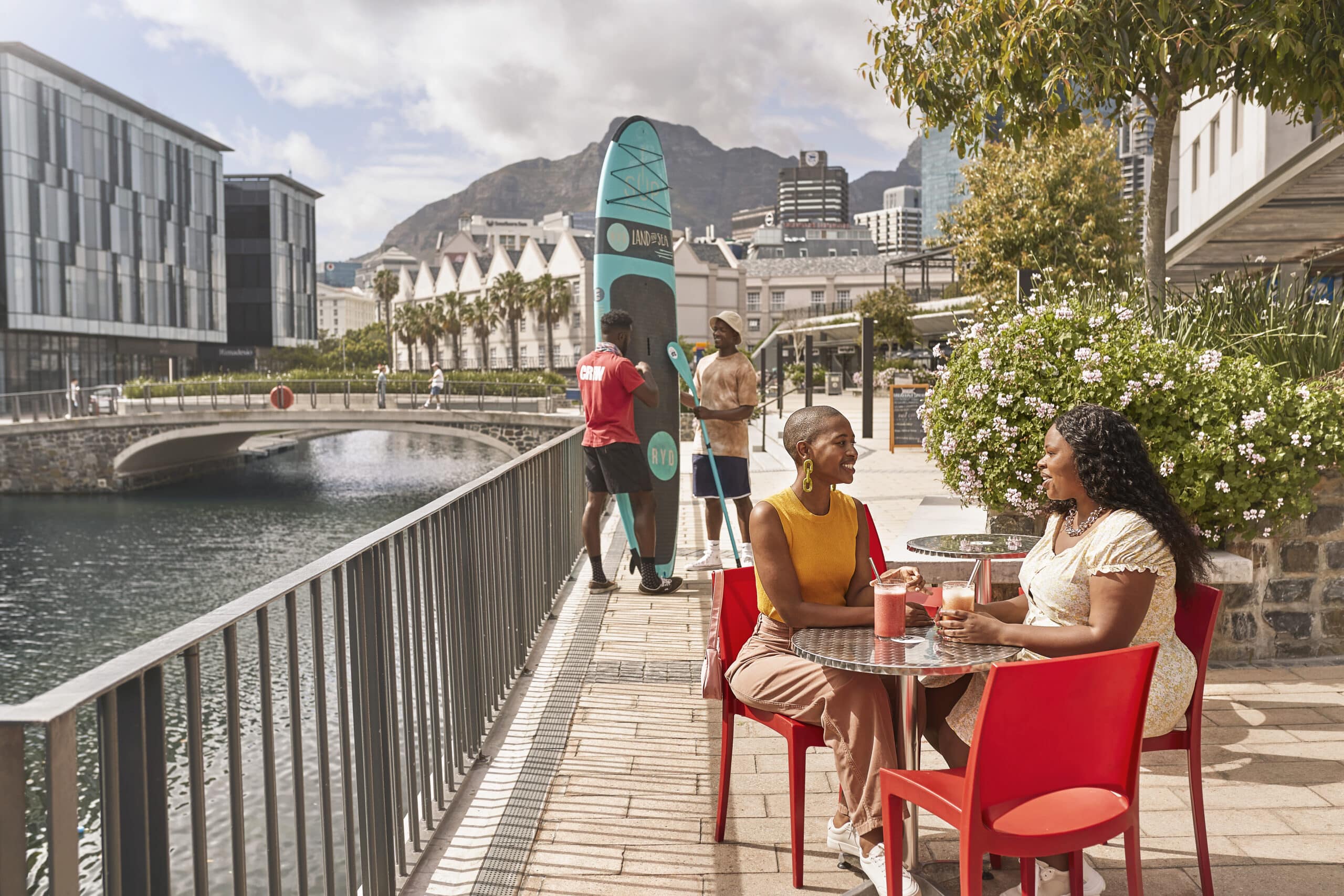
Food lies at the heart of who we are as a neighbourhood.
More than 22.5% of the area of our shopping centre is dedicated to food and food-related products – that is more than 80 food outlets, (excluding grocers).
Our two successful food markets – the V&A Food Market and the Oranjezicht City Farm market – together have given access to market for 150+ small food operators.
Makers Landing at the Cruise Terminal is home to a shared industrial kitchen space, where innovators can test products on scale without the crippling overheads of conventional commercial kitchens.
The overarching vision for the food ecosystem at the Waterfront is:
To co-develop a sustainable, locally-biased, ethical, authentic and culturally diverse food ecosystem that supports lives and livelihoods, health and wellbeing.
As we conceptualised how SOLVE could and should engage with the food-conscious community of Cape Town, we sat down with closesstakeholders and food friends to hammer out what this food vision actually says:
So that’s our brief, and as we progress on the journey to give life to this, every project we work on will be measured against these principles.