

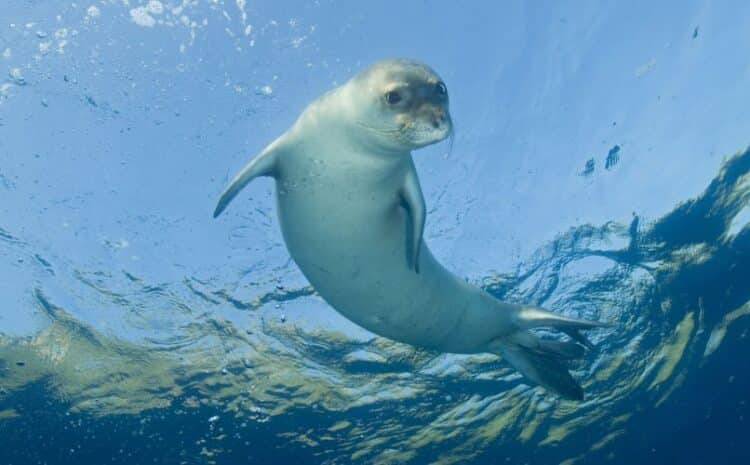
In South Africa’s waters, says Dr Judy Mann of the Two Oceans Aquarium Foundation, more than 2 000 species of marine fish can be found. Around 320 of these (16%) are found only here. In other words, just as the Western Cape has a celebrated unique fynbos kingdom, there are unique ocean ecosystems under the waves that lap our coastline.
Fish life is also an important source of protein for people, but one that we are heavily abusing. Of the more than 88m tonnes of fish caught annually – in numbers, that’s between one and two trillion individual fish – 37,7% represent stocks that are overfished. We are, in other words, taking fish out faster than they can regenerate, to the point that fishers are despairing, seabirds are starving, and entire ecosystems are teetering. Up to 60% of the fish caught in South Africa is exported, while a great deal is imported from other countries and fisheries which use methods into which South African buyers can have no insight.
To compound these challenges, anything up to 50% of what is caught constitutes sealife that cannot be profitably used by those who fished it, and which is therefore thrown back into the sea, dead or dying. This includes sharks, rays, seabirds and turtles; sea creatures the fishers never intended to catch in the first place. David Attenborough’s 2025 film Ocean shows in shocking detail, too, how living seabeds, the nurseries of the ocean, are unceremoniously flattened by industrial-scale bottom-trawling fishing boats, effectively destroying parts of the ocean’s ability to regenerate much sealife.
And yet there is about a US$22bn global subsidy for industrial fishing.
However, we also know that it is possible to have healthy and sustainable fisheries that support communities, the ocean ecosystem, and unexpected aspects of our lives. “The oceans are pivotal to how we exist as a species,” says Pavs Pillay of World Wildlife Fund. “If you break down the ocean ecosystem, it impacts a lot more than the fish on your plate. It affects whether we are hot or cold; it is about the rain in Gauteng. It is about the air we breathe”
But nudging humankind back into that more respectful relationship with the ocean is not easy.
The Waterfront’s Sustainable Seafood commitment
The V&A Waterfront, through SOLVE@Waterfront in association with the Two Oceans Aquarium Foundation, is in the third year of exploring how it can nudge the 100+ eateries based on our premises, and their annual millions of patrons, to make more sustainable choices. What are the compelling social and ecological benefits that might be driven by changing behaviours across the precinct? What are the barriers that stop restaurant procuring from more sustainable sources? How can we switch things around?
In the first year of this work, in 2023, we knuckled down to understand what, in the context of the V&A Waterfront, “sustainable” even means when it comes to seafood. A fascinating discussion revealed that while we may all be heading in the same direction, the ocean-minded organisations seeking to promote sustainability (WWF-SASSI, MCS, Abalobi, DFFE) have different focus areas, definitions and approaches. The Waterfront, we concluded, should develop a pragmatic and simple reference for the food outlets in the precinct. Since then, we’ve largely agreed on two principles: that seafood should, where possible, be locally sourced; and that it should be traceable. These principles allow us to understand the provenance of our seafood, and thus know what externalised costs there may be to the fish being bought.
Our 2024 panel discussion took the next step and asked: what would make it easier for everyone across the V&A value chain to make choices that positively support the ocean ecosystem, both social and environmental? The answer arrived at is multi-faceted and involves storytelling that leads to chef education, customer education, and the education of children. “Children teach their parents,” the DFFE’s Deputy Minister Narend Singh reminded the audience. The solution also involves a renewed commitment to seasonality, partnerships, and increasing the availability and promotion of lesser-known sustainable species.
By now, we’ve agreed that there are four questions all buyers of fish should be asking:
The 2025 Sustainable Seafood gathering
In 2025, we moved our attention to species. Knowing that there are sustainable options which are rarely found on menus or at the fish counter, our questions to the panel were:
The panel, facilitated by Dr Judy Mann, included four chefs at different stages of their sustainability journey, as well as Abalobi, a small-scale fisheries enabler, represented by Chris Kastern; and World Wildlife Fund’s South African Sustainable Seafood Initiative, (WWF-SASSI) represented by Pavs Pillay. The chefs were Chris Erasmus, of Newmark Hotels and Reserves; Gregory Henderson of SA Chefs Association, Veronica Canha-Hibbert of Silo Hotel, and Grethel Ferreira of Life and Brand.
In summary, these are the points our panelists made:
The benefits of shifting to sustainable sources of seafood (local and traceable)
“Two years ago,” said Chris Erasmus, “we made a conscious decision about where we buy. The question is: where does the money end?
“So we have taken out the big suppliers – it’s a lot more complicated to deal with many small ones, but buying straight from small suppliers is keeping the money in the village.” This is a paradigm shift that requires big suppliers to motivate why they should be considered for procurement decisions alongside small suppliers, rather than the usual other way around “Being authentic about regional food,” said Chris, “requires us to be authentic about regional buying.”
Other points raised:
But if it’s all good to shift that way, what are the barriers?
“Sustainability is simple,” acknowledged Pavs Pillay, “but it’s complex.” She was referring to the SASSI list, where a single species can be both green and orange, depending perhaps on where it was caught.
“Traceability and transparency is what’s needed, and chefs are not getting the information they need. Once a fish is reduced to a fillet, it’s hard to figure out where it was caught, how it was caught, even what kind of fish it is.”
Other points raised:
Although aligning menus with more sustainable species is a challenge for chefs, Gregory Henderson pointed out that “customers are asking hard questions, and we need to start building good answers.”
What can we practically do to make it easy for everyone to realise the benefits of selling sustainable seafood?
“There are things we speak about now that were not on our radar 25 years ago,” pointed out Grethel Ferreria. “Marketing, social media… keep telling the story. Eventually things will change.”
Some other thinking that emerged included:
We need, said Pavs, to play the long game. “We want to see fish in the oceans, and on our plates. We can work collaboratively to make a difference, if we are transparent and honest. If it’s not in season, don’t put it on your menu. If you doubt its origins, don’t put in on your menu. Keep supply chains short. Bring yourself up to speed. Be part of the journey.”