Brand-building: a challenge in an era of digital distrust
It was around 2004, with the emergence of what was called Web 2.0, that the marketing landscape irrevocably changed. In the first iteration of the interwebs, web pages were static and read-only. With Web 2.0, they became interactive. Now anyone could generate, edit and share content; and comment on others’ content. And just like that, brands lost the power to control the narrative about their own business. From mom-and-pop corner stores through major corporations to countries, reputation became a football for others to play with. You feel you’ve been unfairly fired ? You can take revenge by anonymously defaming your ex-employer. Your recently-launched restaurant is struggling to find traction? You can steal market share by faking bad third-party “reviews” about your competitors – and glowing “reviews” about your own. You had a bad experience with Border Control in Australia? On your socials you can make sure that all of your followers will think twice about going there.
As we head rapidly for Web 4.0 (which is based on AI-driven automation, and characterised by blurring of boundaries between physical and digital worlds), it is a given that the digital space is a reputational battleground. And it is also crystal clear what the price is: a loss of belief among clear-thinking people that digitally published content is trustworthy (a horse that Donald Trump’s “Truth Social” tries to bridle, calling posts “truths” and reposts “retruths”).
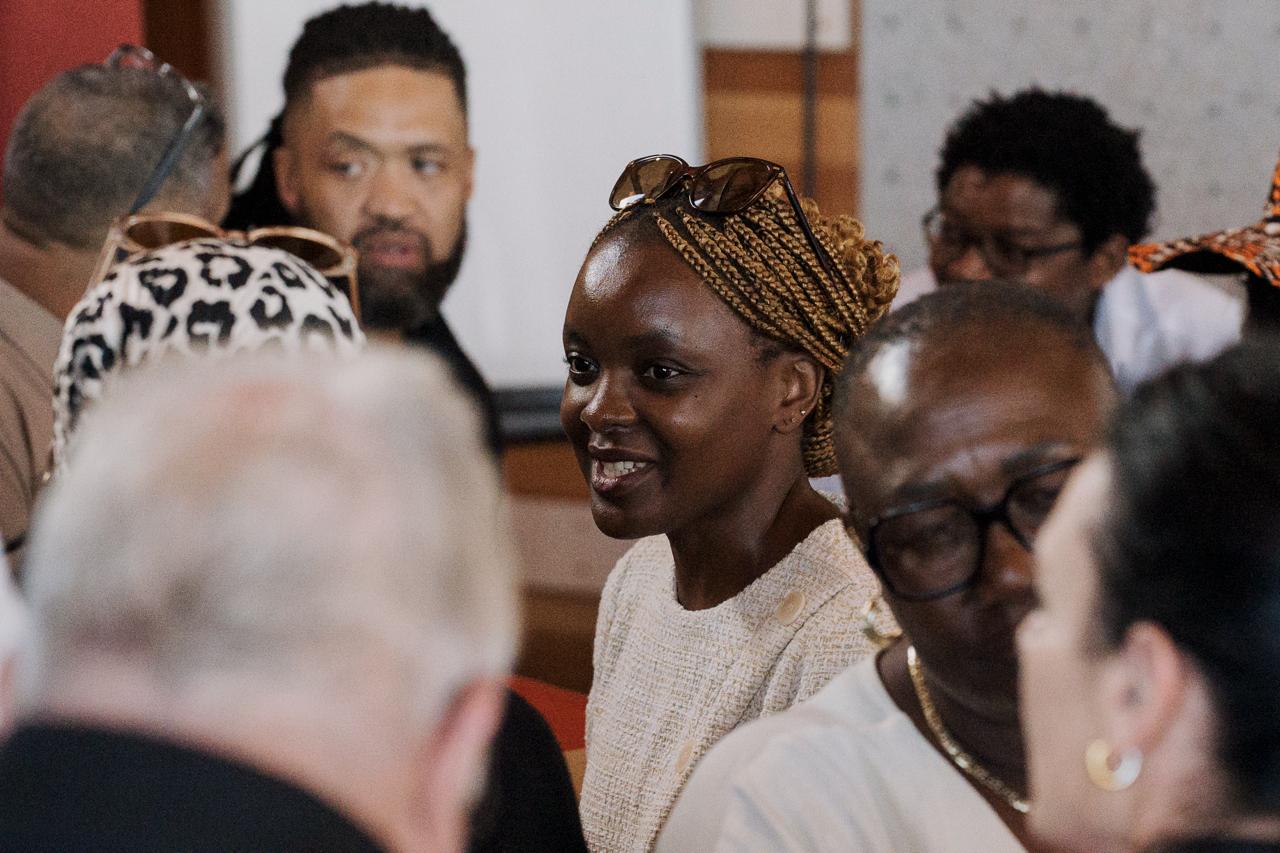
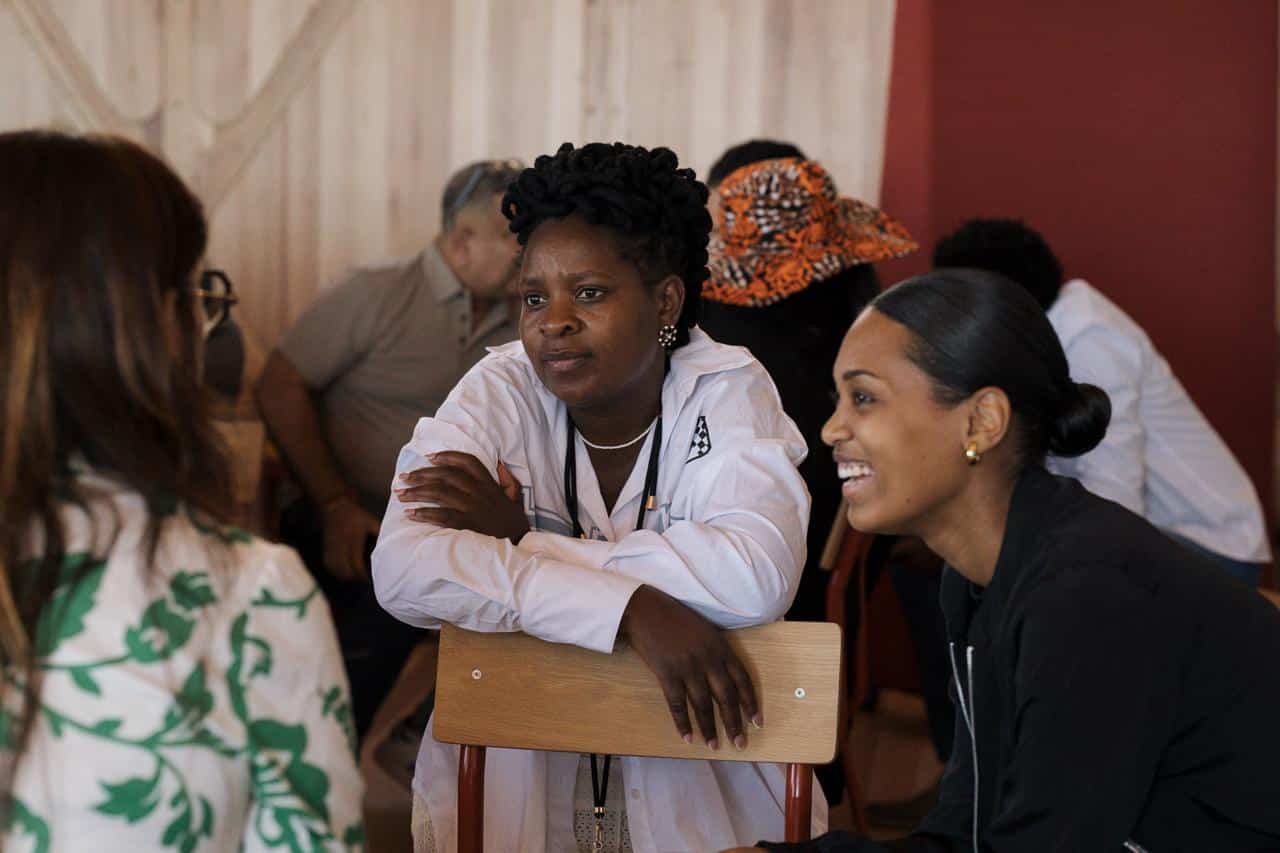
So it was apt that Mike Stopforth’s talk at the V&A Waterfront’s Learning Lunches series was on the subject of “Brand building in a digital era: Where technology, trust and leadership meet.” The Learning Lunch, in partnership with Heavy Chef, was part of series that brings SMMEs across the Waterfront precinct together in a co-learning space, building community and mutual problem-solving.
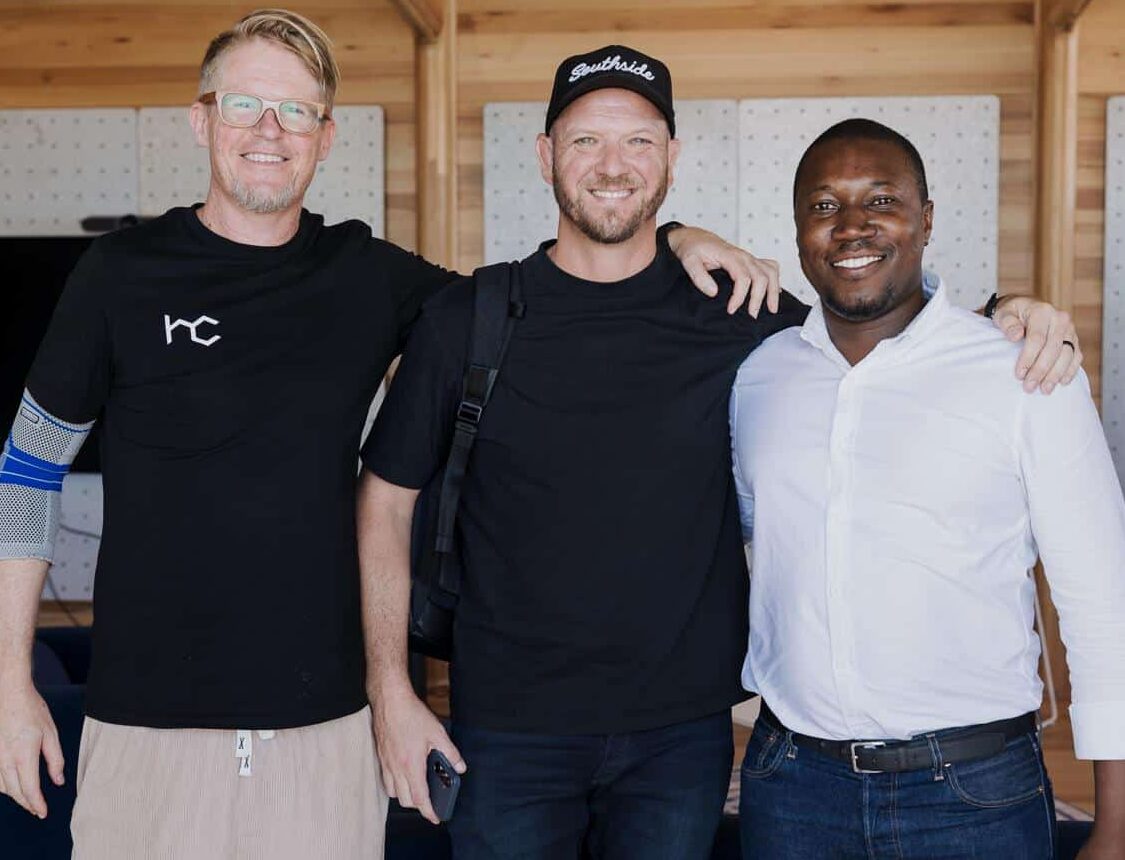
Mike, managing director of Second Rodeo, is a serial entrepreneur and author with a passion to help business leaders navigate digital disruption and build brands that thrive in the digital era.
At the Learning Lunch, held in mid-February 2026, he made a radical suggestion. We may need, he proposed, to change our thinking about brand. Technology reshapes leadership; the competitive edge has shifted, and now derives from curiosity, adaptability, and digital fluency.
HOW DO YOU STEER A BRAND?
Since the mid-2000s, when Mike himself hit his head against the Web 2.0 challenge of not having ownership of the narrative, businesses have struggling to marry the imperatives of brand-building and customer engagement.
The big risk, Mike says, is between what you promise as a brand, and what you deliver to your customers. But measuring something as intangible as a brand or its impact is tricky, since a brand is a collection of stories, emotions, etc that are ultimately related to personal experience. “Your brand is not what you say it is, it’s what your customers say it is,” he pointed out. How can we ensure that the projection we desire people to see, is what they do in fact see?
It starts, Mike says, with authenticity. Social media and spin cannot fix a business that doesn’t deliver. “Happiness = expectation minus reality.” The only way to win is to (a) deliver the promised experience; or (b) change the promise.
But here’s the problem: “nearly all small businesses have weaknesses in one way or another”.
The challenge, Mike stresses, is to weave the narrative of “we’re on a journey to excellence” while not oversetting expectations. This allows you to aim high without over-promising, and to retain authenticity.
“What is your story – what do you want people to say?” says Mike. “That story needs to be the anchor on which all other activities are built. There’s a cascading and diminishing return on all initiatives if that original story isn’t at the heart of it.
“Brands lose their promise for consumers when they lose sight of their pillar of truth.”
HOW DO WE GET TO THE BRAND TRUTH?
Small businesses are often tied up in operations, and when values are defined, they’re often seen as a “poster”, a statement of aspiration, rather than a reflection of what the business actually stands for. It’s a truism that businesses which make generic promises along the lines of “because we care”, turn out to care more about their own internal processes than their customers’ convenience.
So, how do you come to a brand truth?
As a starting point, be clear about what your value proposition is, says Mike, and stick to it. Apple is all about innovation and challenging norms; their “Think Different” line, while grammatically questionable, sums that up. Likewise, Nike wants to talk about perseverance, empowerment and motivation, hence “Just Do It”, one of the catchiest brand lines of our era. L’Oreal wants to address ideas of self-worth and confidence, so: “Because You’re Worth It”.
An illustration Mike shared was of a hotel night. The fundamental job of the hotel sector is to provide patrons with a safe and comfortable space to sleep. The hotel industry, seeking distinction and to keep shareholders happy, added on layers of extras (with costs being passed on to patrons) and forgot their single truth, or the job they had to do. The sector was ripe for disruption by the short-term letting sector such as Airbnb (launched globally 2007) and Lekkeslaap (2013). Hotels are the losers: in late 2025, an article in GroundUp quotes the City of Cape Town as saying that 70% of all residential units in central Cape Town are given over to short-term lets[1].
By contrast, he gave the example of Sealand, which made significant environmental promises. Though not particularly easy, these were proof points for its single truth, which is creating sustainable, durable, and functional adventure gear from waste materials, supporting a “Gear for Good” philosophy that puts people and the planet first. Its payoff line: “Where Values are Valued”.
HOW DO YOU CLOSE GAPS BETWEEN PROMISE AND REALITY?
One way of defining marketing is that it is about building and maintaining profitable relationships. But, how do you quantify a relationship? The effectiveness that all businesses want to see, lies in the figures. That’s where you see the balance between the tangibles (sales) and the intangible (relationships).
Mike tells a story from his own experience, when his ad agency held the account for a popular vehicle manufacturer. Leveraging off the iconic status of the brand, the agency created fan pages, and experienced what Mike describes as an incredibly exciting early success. Follows grew exponentially, and people posted their stories – including one that was a “eulogy” for a vehicle that was seriously old, and was now on blocks. The community got together, identifying the parts it needed to come alive again, and together rebuilt this car. #Winning!
However, three months later, Mike’s agency lost the account, because despite all the chatter, cars were not being sold. It’s when people took their vehicles for test drives, the client said, that sales followed. The marketing strategy had to change to achieve more test drives, and hence sales.
So, to achieve integrity in your brand’s value proposition, and to meet what the business needs to flourish, the approach Mike suggests is:
- Identity – what is your unique selling point and value proposition? Your brand identify is at the intersection of who you say you are, and who your customers say you are (which, you hope, are close together) in the context of the competitive landscape.
- Set your objectives and understand what has worked before in terms of meeting those objectives.
- Develop content that speaks to your story and that will drive your objectives.
- Flesh that out with the meaningful dimensions to give life to the strategy – the pillars of the strategy, the relatable personas representing your market, the platforms that would work best for these personas. In the conversation towards the end of the session, it was suggested that businesses should think of brand as something like a dating profile, and embody the profile (generative AI is quite useful). Then, build an audience persona around this person, or use the persona to narrow down the target audience.
- Publish. In question time, the question was posed as towhether one would do the same thing across all platforms? That, says Mike, depends on resources, and specifically time. “Rather do less better than more less well.” It’s valuable to remember that digital marketing may not necessarily contribute to direct sales – it can perhaps be a lagging indicator, contributing instead to reputational build.
THE BUSINESS MAKES THE BRAND, NOT THE OTHER WAY AROUND
An examples of how business excellence has built enviable brand equity is Checkers Sixty60 – at the time of its launch in late 2019, Checkers brand equity wasn’t great. However, Sixty60 so thoroughly met the brand promise that it developed an equity of its own. It helped that the Covid-19 lockdown came along a few months later forcing shoppers to explore online grocery shopping, and it marked a turning point in South African FMCG retail. Checkers hasn’t looked back since, and is the fastest-growing grocery chain in South Africa[2].
Another example is Willoughby’s at the V&A Waterfront which, though situated in a busy concourse with no access to the V&A’s iconic views, has built an enviable reputation on a high level of consistency. Visitors to the Mall will have seen queues snaking at the reception desk on any given day, at any given time – and that’s without any advertising whatsoever.
At the other end of the scale is Outsurance, which relied on storytelling to build its brand. The strategy was to find a point of difference – easy enough, as its direct-to-customer model and “OUTbonus” cashback scheme were market disrupters – and then, as Mike says, to “advertise the hell out of it”. In the 30-odd years since launch, it has become one of South Africa’s most trusted insurance brands, in an often problematic market. But it would not have achieved this on storytelling alone. The business has also delivered consistently on its brand promise which is “to deliver fair treatment, great value and service that shows up when it matters most”.
HOW DO YOU RECOGNISE A PERCEPTION GAP AROUND YOUR BRAND?
Deliberately seeking this insight is critical, says Mike. The methodology will vary from business to business, but a good starting point is social channels, difficult as it is hear negative criticism. Especially when something goes wrong, it’s important to engage because the real crisis is seldom what actually happened. The real crisis is usually what people are saying about it.
.
ABOUT THE SMME CLUSTER:
SMMEs work in a famously challenging social and economic environment. The V&A Waterfront’s SMME Cluster, which drives the Learning Lunches, is about establishing a mutual support system for SMMEs in our network, and working together around shared challenges and opportunities. Our goal: a more resilient, innovative and flourishing SMME community.
ABOUT HEAVY CHEF
Heavy Chef is a learning community for entrepreneurs (the name comes from the saying “never trust a skinny chef”). It aims to inspire entrepreneurs to start, then empower them to succeed. It runs learning programmes for hundreds of entrepreneurs each year, and has a community of 50,000+ entrepreneurs. V&A Waterfront’s Learning Lunches are among its programmes.
[1] Hotels have managed to get some part of that pie through management contracts, but the majority of business goes through short-term letting platforms.
[2] Pick n Pay has marginally declined from a 16% market share in 2020 to 15% in 2025, while Woolworths is consistent at 10%. By contrast, Checkers has gained 1% of market share every years since 2020, to achieve 37% by 2025.