

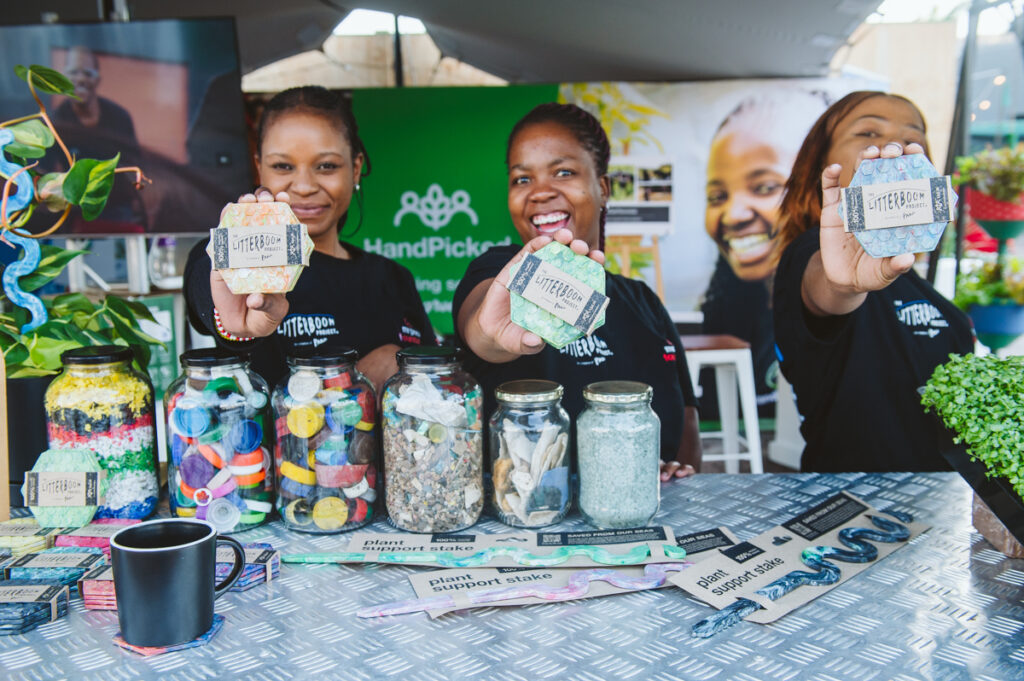
The Litterboom Project is a South African non-profit that tackles plastic pollution by installing floating barriers (“litterbooms”) in rivers to intercept waste before it reaches the ocean, while also creating jobs and empowering communities through recycling and circular economy initiatives.
The Litterboom Project Innovation Hub was launched in 2023, supported by the Mr Price Foundation and Chep. It trains Wastepreneurs to transform post-consumer and post-industrial plastics into valuable products. By creating new uses for plastics that often have no recycling pathway, the hub adds value to problematic materials, reduces pollution, and builds economic incentives for reclaimers, buyback centres, and local communities. This approach strengthens the circular economy by keeping plastics in productive use. The hub directly empowers Wastepreneurs by giving them training, tools, and market access. Indirectly, it supports River Wardens, reclaimers, and buyback centres who collect plastics, creating a trickle-down effect of economic opportunity.
The pilot programme in 2022 led to graduates securing full-time employment in beneficiation projects, showing tangible empowerment outcomes.
The Innovation Hub is a catalyst for circularity: it turns waste into opportunity, builds local entrepreneurship, and strengthens community livelihoods while tackling plastic pollution at its source. Watch this video for more.
Where was your business when you entered the Challenge – and how have things evolved?
At the time we entered in 2023, The Litterboom Project was primarily focused on its plastics intercepting role; the vision for the Innovation Hub was very early stage.
Winning the Challenge was a defining moment. It validated our belief that plastic pollution could become a resource for innovation and economic opportunity. We’ve now evolved from being an environmental clean-up organisation into a “Source to Sea” circular economy organisation, combining river and coastal interception with material recovery, product development and manufacturing. Today, it’s incredibly rewarding to walk through the Innovation Hubs and see products being manufactured from plastic that only hours earlier was polluting South African rivers.
We’ve grown our river and coastal operations to intercept approximately 100 tonnes of environmental pollution every month across 10 river catchments and eight Back A Beach Coastal teams in Cape Town and KwaZulu-Natal. We create meaningful employment for 130 local community members through our River Warden, Coastal Team and Strike Cleanup and production programmes while demonstrating that environmental conservation and job creation can go hand in hand. We’ve also launched our Cape Town Innovation Hub. Initially established as a training space for Wastepreneurs, it has evolved into a light manufacturing and innovation facility where new products are prototyped, tested and produced from recovered river plastic.
So far, 16 local community members have gone through the Wastepreneur Programme, completing practical training in plastic processing and manufacturing. Six of these have been retained within The Litterboom Project, creating long-term employment while building skills and pathways into the green economy. The product range has grown from a handful of prototypes to a collection of high-quality, commercially viable products made from intercepted river plastic, culminating in the launch of our online store, TLP Shop, which brings circular economy products directly to consumers. The growing range of products includes keyrings, coasters, plant support stakes, hair and surf combs, hooks, spin top toys and prototype products developed in collaboration with partners. Every product tells the story of plastic intercepted, giving businesses and consumers the opportunity to directly support a circular economy.
One of our favourite moments is watching people realise that the coaster, surf comb or repurposed product they’re holding was once floating downstream towards the ocean. It’s a tangible demonstration that waste isn’t the end of the story. It can become the beginning of environmental restoration, economic opportunity and circular innovation.
We’ve also built strong partnerships with municipalities, corporates and environmental organisations to scale both our environmental and social impact.
What’s next?
Expand our river and coastal interception network and increase public awareness around plastic pollution, demonstrating the importance of intercepting waste at source.
Grow demand for products made from intercepted and repurposed plastic, helping to create sustainable markets that increase the value of recovered materials and strengthen the circular economy.
Strengthen partnerships with municipalities, businesses and environmental organisations to scale our efforts and create lasting environmental and social impact.
Any advice you’d give to businesses thinking about applying?
Apply. The Challenge is about far more than the prize. It opens doors to invaluable mentorship, partnerships and exposure that can accelerate your business in ways you may not expect.
Be authentic about your journey, your challenges and your impact. The best ideas are often those that solve real-world problems with practical, scalable solutions.
SOLVE involvement beyond the Challenge:
Included in a World Trade Organisation workshop focused on circularity value chain. The V&A worked with TLP to partner on the Plastics Lab as part of their Lab’s expansion to Cape Town (they ultimately chose a location closer to their source material). Multiple interviews on Cape Talk telling the story of TLP to a wider audience. Funded their participation in GenBlue peer-to-peer Business Acceleration Programme. Encouraged them to enter Earthshot and provided all the necessary information and contacts to make this possible.