
Buildings designed to be taken apart
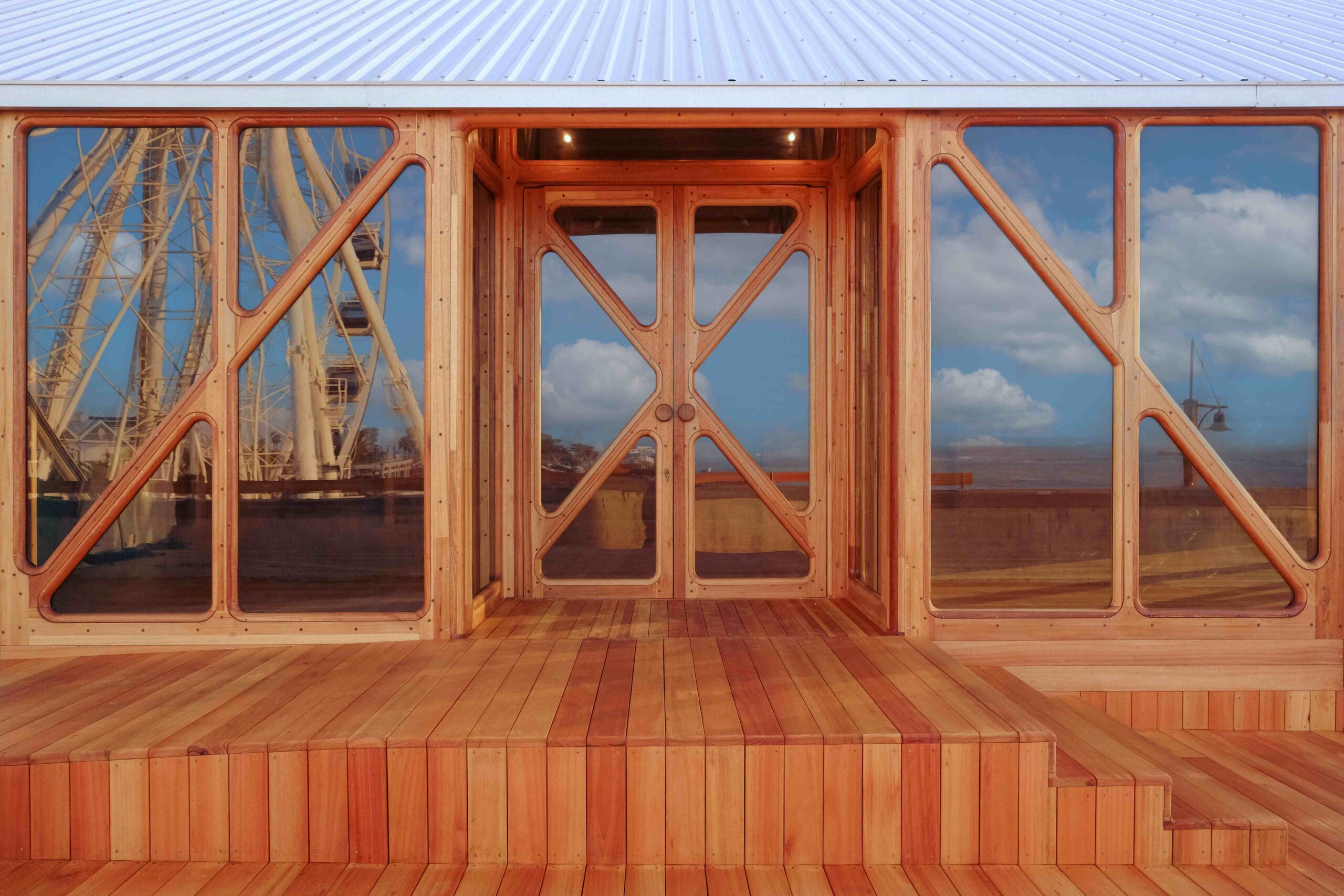
The exterior door to the Exhibition Pavilion.
Ten years ago, circular economy principles and regenerative thinking were not mainstream. Conversations around embodied carbon, material transparency and lifecycle thinking were niche in many boardrooms. Today, they are common, and sometimes non-negotiable.
At the V&A Waterfront, our own sustainability journey has matured. What started as isolated environmental initiatives has evolved into an integrated approach that cuts across energy systems, waste infrastructure and water resilience. In 2019, sustainability was formally adopted as one of the V&A Waterfront’s strategic pillars[1], with a particular focus on circularity.
However the V&A is, amongst other things, a property development company; and the built environment sits at the centre of the world’s climate and social challenges. Quite apart from the carbon cost of the construction phase, buildings are long-lived assets. Infrastructure shapes behaviour for generations. Decisions made at design stage lock in impact for decades.
In terms of our strategy, therefore, the V&A is obligated not only to produce the greenest possible buildings, but also to innovate and prototype around alternative builds, pushing the boundaries of what’s possible.
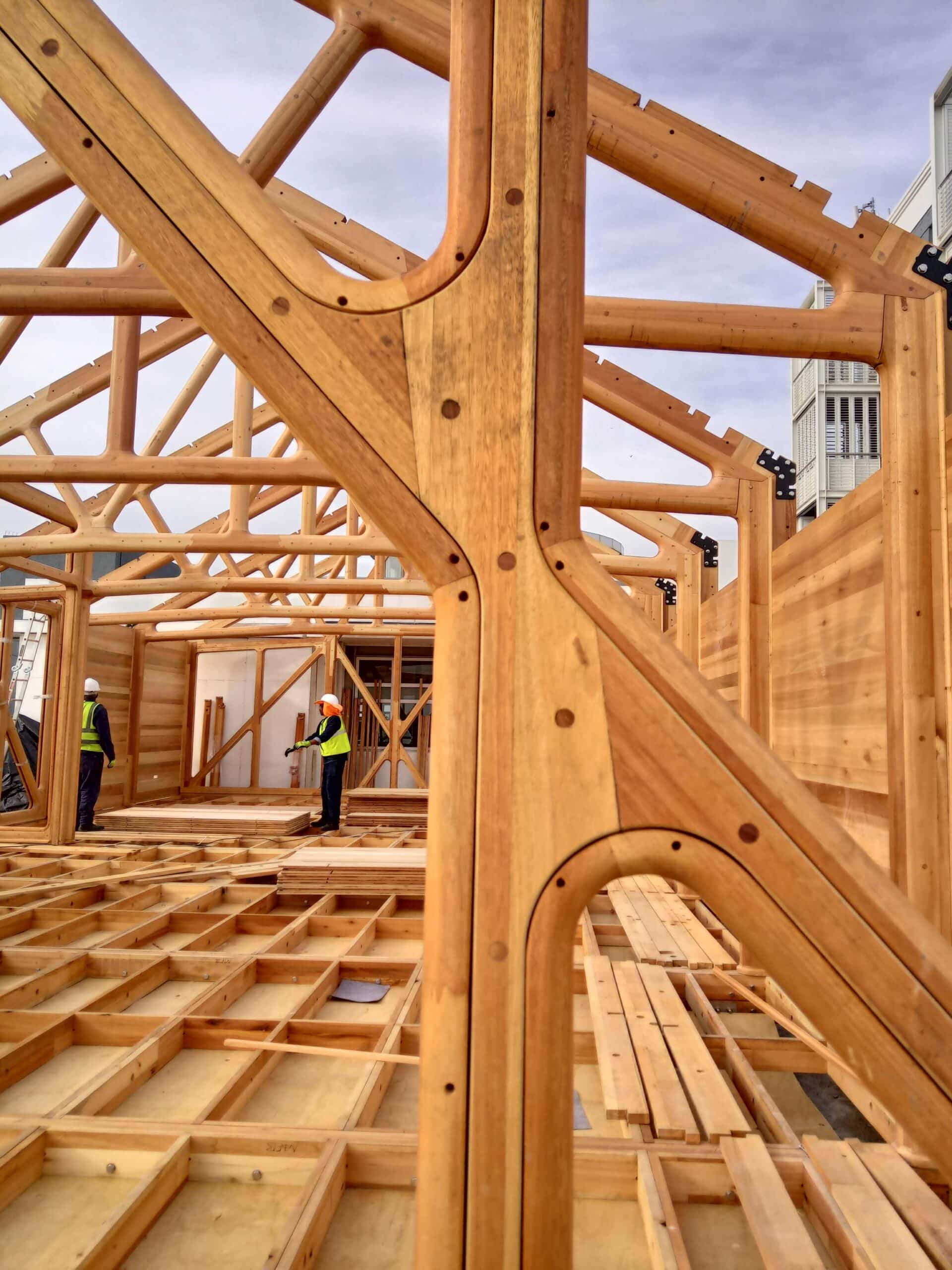
One recent proof point of pushing boundaries is the new space occupied by the Oranjezicht City Farm Market, the timber structure for which used 235 sq m of locally sourced timber, and which has been built to be disassembled and fully repurposed. Another is the nearby Exhibition Pavilion, which sits lightly atop an existing structure. Both reflect circular thinking: using what already exists, and adding value without unnecessary expansion.
Though modest, the Exhibition Pavilion tells an important circularity story that generates ripples way beyond the building itself.
Its contractor/designer was David Krynauw Design (read the story on his website here); and the brief was:
- to showcase sustainable construction that includes structural timber, dematerialisation and natural ventilation; and
- to be able to disassemble the structure for relocation should its current site be redeveloped in future.
The brief was, in other words, to design the Pavilion with the end in mind.
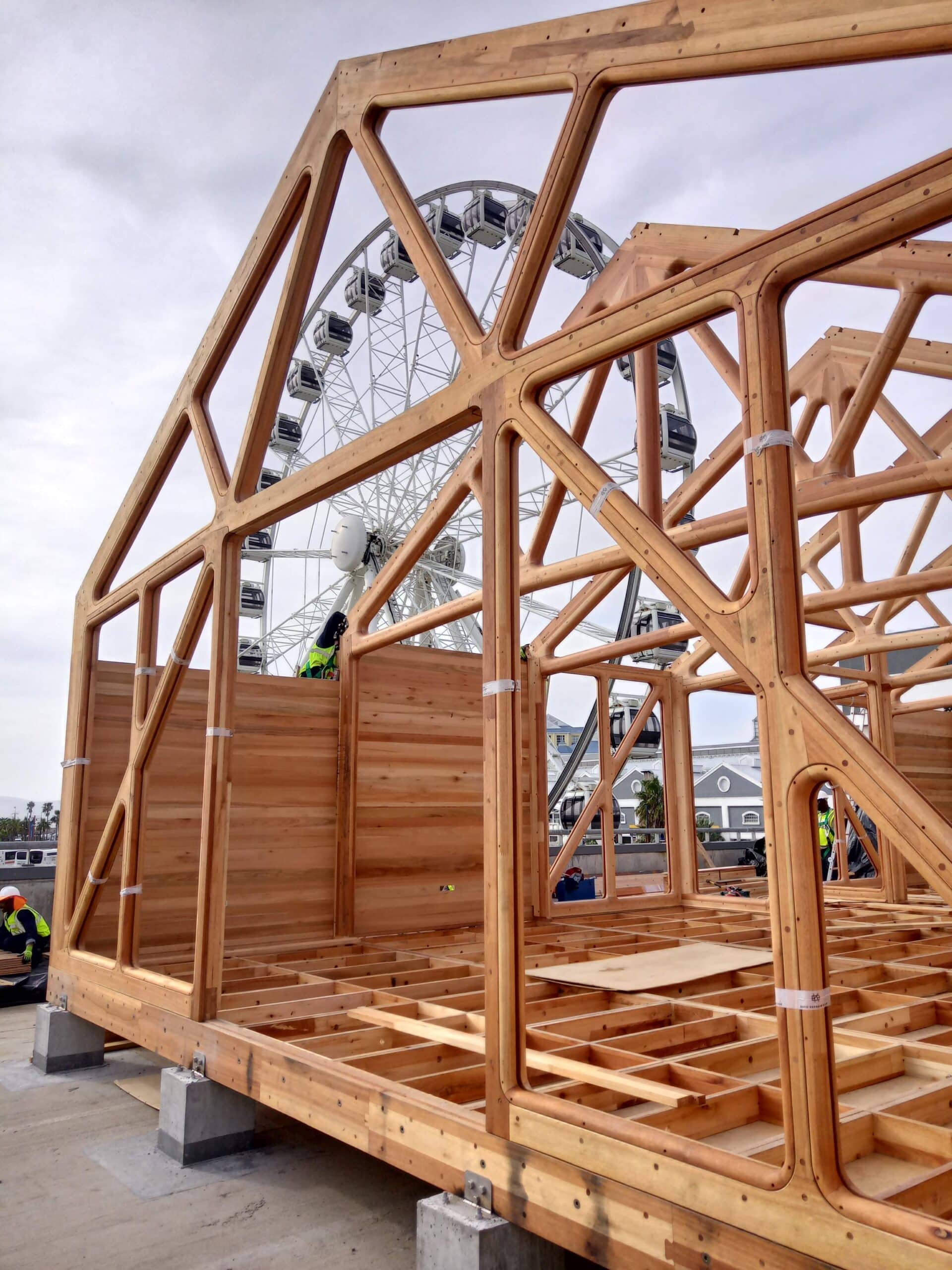
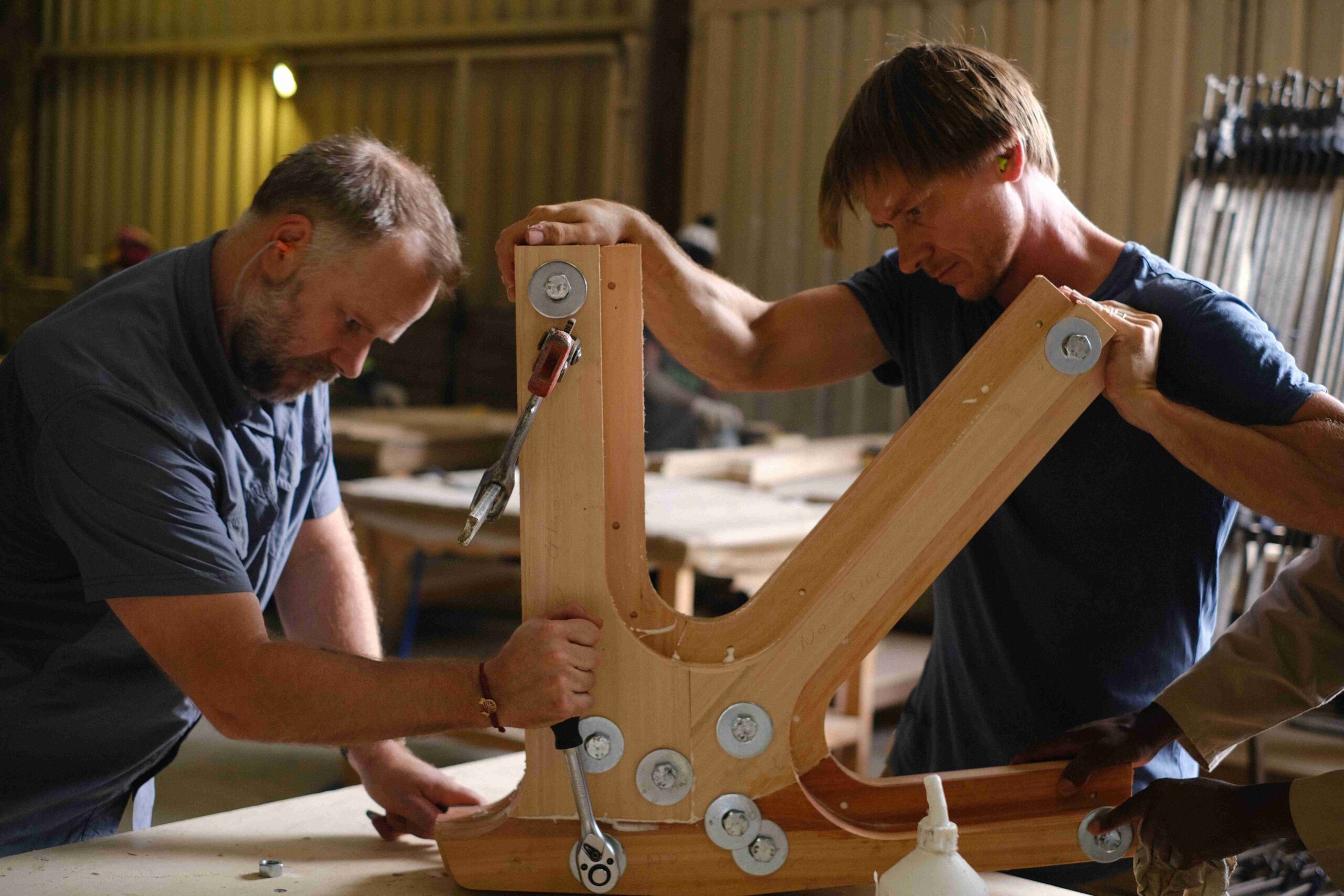
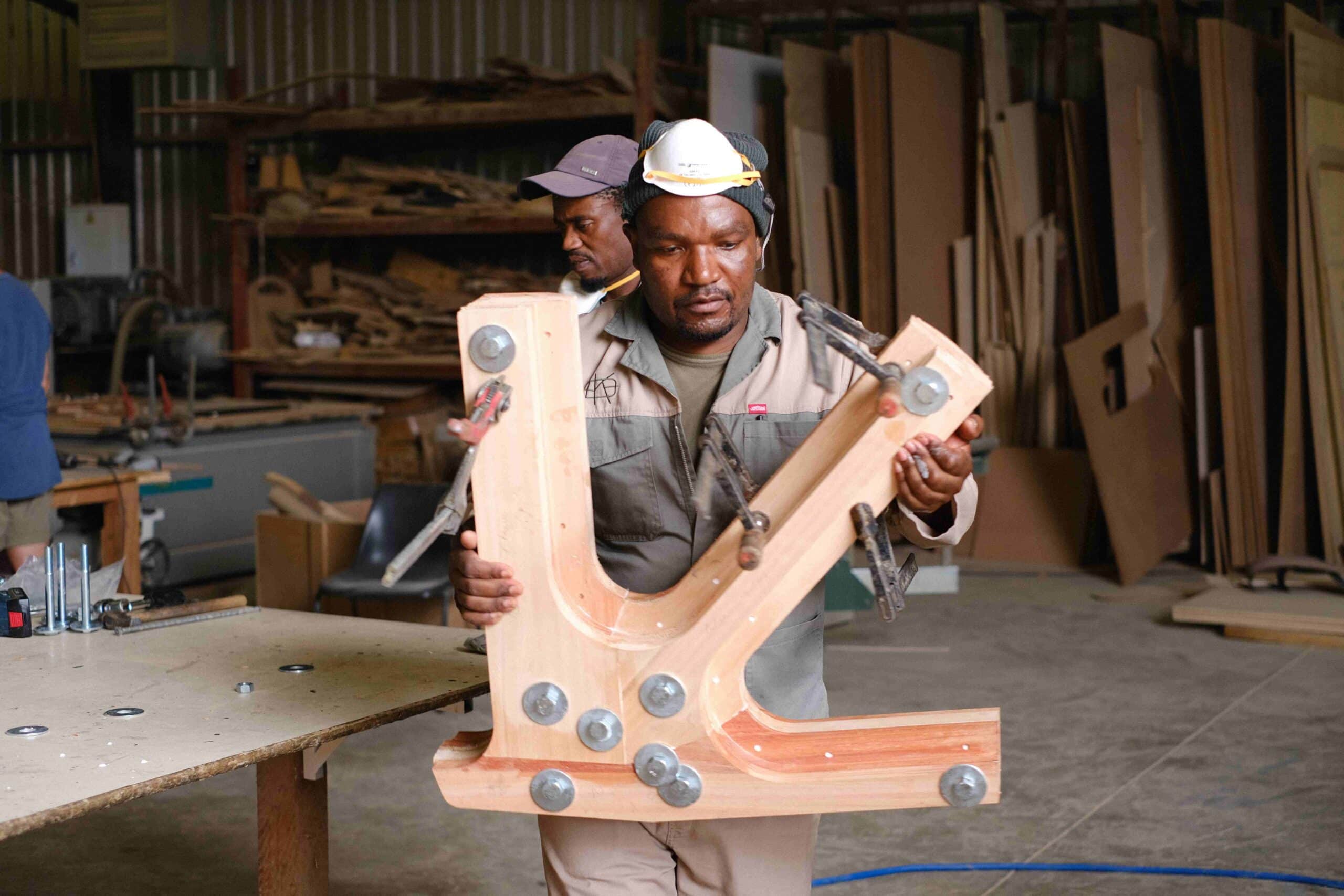
From seedling to mature tree to structure, you could argue that this building is 30 years old and has travelled the country. The timber was sourced from a sustainable forest near Piet Retief in Mpumalanga and individual parts of the structure manufactured in the DKD factory located near Hartbeespoort dam in the North-West Province, with installation at the V&A Waterfront in Cape Town.
Naturally, when prototyping something new, there were some hiccups, and some important lessons learned. However, having completed the first one, Krynauw is confident he is on to a good thing: his team of seven carpenters could replicate this structure in only seven days, he believes.
There is an important skills development story here. The DKD factory is located in an economically depressed area. The 36 jobs the factory creates play a vital role for the communities from which the employees come; and the big-picture goal of the factory is to become a centre of excellence that can develop low-skilled job seekers into skilled wood manufacturers. To this end, DKD has developed a successful internship programme in partnership with the Gauteng City Regional Academy. Last year 16 of the 19 interns were offered full-time employment.
Since installation at the Waterfront, the Exhibition Pavilion has been in constant demand for presentations, workshops and celebrations. It may be a simple structure, but somehow the essence of its origins and of those who worked on it brings a kind of magic to every event.
This is an extract from remarks made by V&A Waterfront Sustainability lead Petro Myburgh at the 10th Anniversary celebrations of the African Circular Economy Network (ACEN).
[1] The others are opportunity and inclusivity.